
Learning objective
Managing Files & Projects
Create, Save, Open
1
2
3
4
5
6
Welcome to Create, Save, Open! In this strand, you will master starting new digital projects, saving your work securely with clear file names, and locating and opening your saved files whenever you need them.
New Projects
Opening apps and creating new projects.
Let's Go!

Routine: See, Think, Wonder
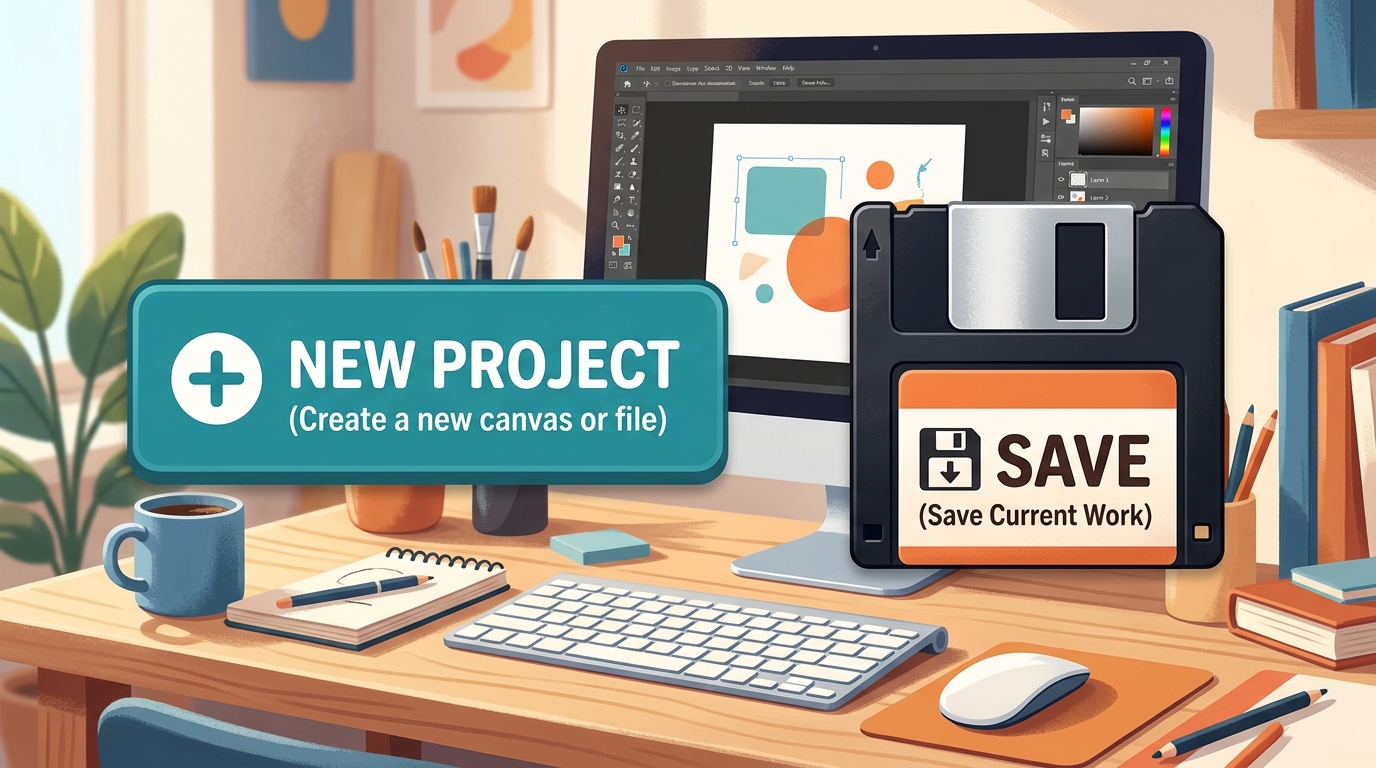
Look at these two buttons on the screen: 'New' and 'Save'. What do you think happens when you click each one?
Learn
Whenever you start something new on a computer, you click 'New File' or '+'. To make sure your hard work doesn't disappear when you turn off the computer, you must click 'Save'!
Try it yourself
Create and save your first file!
🚀 Open a practice space
🌟 Student Project GuideSuccess Criteria & WAGOLL (What A Good One Looks Like)
🎯 Task Success Criteria (Rubric)
Foundation
Open an app and start a blank project.
Developing
Type or draw content into a new project.
Secure (Goal)
Click 'Save' and type a simple file name with teacher guidance.
Mastery
Locate the save icon and save independently. Typing: 5 WPM.
👀 What A Good One Looks Like (WAGOLL)
 ⭐ Secure Standard
📁
Save to Your Website Portfolio:
When you finish creating your project in your software, copy the share link or take a screenshot and publish it onto your student portfolio website!
⭐Self-Assessment: How confident do you feel with this skill?
Reflect
Learning check
Teacher setup, curriculum links and progress descriptors
Spark support
Routine: See, Think, Wonder
Achievement pathway
- Foundation: Open an app and start a blank project.
- Developing: Type or draw content into a new project.
- Secure: Click 'Save' and type a simple file name with teacher guidance.
- Mastering: Locate the save icon and save independently. Typing: 5 WPM.
Curriculum links
Curriculum strand: CM.01.B.1.2
Outcome: CSO-O-01 — Opening apps and creating new projects.
PYP: Form · Creating digital work allows us to express our ideas.
Learner profile: Inquirer
Competency tags
Gate support
Accessibility alternative:
Teacher override: allow
Locked level
Level 2: Naming Files
Complete the previous learning check to unlock this next level.
Naming Files
Descriptive file naming and folder organization.
Learning objective
Learning About: Clear File Names. Learning To: Save to a folder. Learning To Be: Communicator.
Let's Go!

Routine: Zoom In
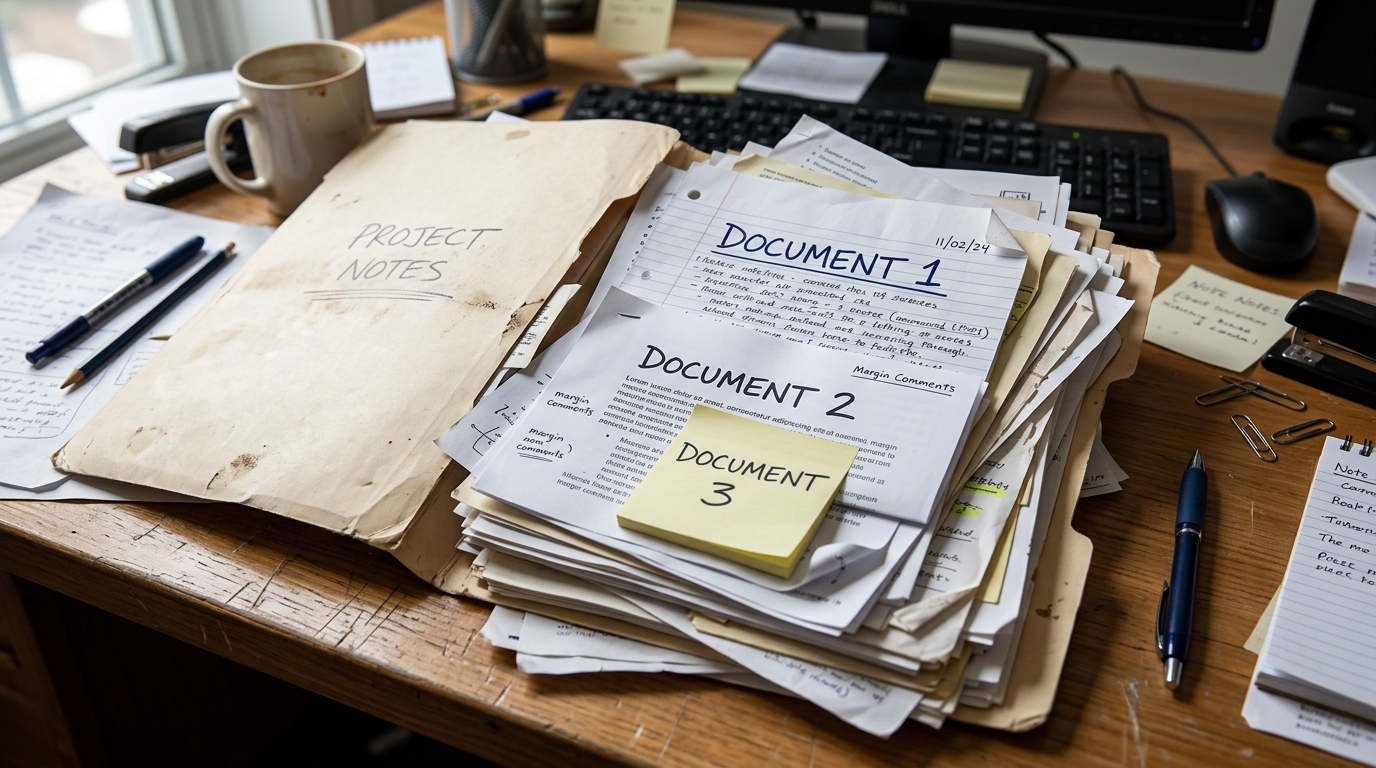
Look at this messy folder full of files called 'Doc1' and 'Doc2'. Can you guess what is inside any of them?
Learn
Leaving a file named 'Untitled' makes it impossible to find later! Always give your file a meaningful name that describes what is inside, like 'Year2_Science_Plant'.
Try it yourself
Name and save properly!
🚀 Open a practice space
🌟 Student Project GuideSuccess Criteria & WAGOLL (What A Good One Looks Like)
🎯 Task Success Criteria (Rubric)
Foundation
Understand that files need names to be identified.
Developing
Replace default names like 'Untitled' with a descriptive word.
Secure (Goal)
Save a file directly into a specified class folder.
Mastery
Explain why names like 'Doc1' cause confusion. Typing: 10 WPM.
👀 What A Good One Looks Like (WAGOLL)
 ⭐ Secure Standard
📁
Save to Your Website Portfolio:
When you finish creating your project in your software, copy the share link or take a screenshot and publish it onto your student portfolio website!
⭐Self-Assessment: How confident do you feel with this skill?
Reflect
Learning check
Teacher setup, curriculum links and progress descriptors
Spark support
Routine: Zoom In
Achievement pathway
- Foundation: Understand that files need names to be identified.
- Developing: Replace default names like 'Untitled' with a descriptive word.
- Secure: Save a file directly into a specified class folder.
- Mastering: Explain why names like 'Doc1' cause confusion. Typing: 10 WPM.
Curriculum links
Curriculum strand: CM.01.B.1.2
Outcome: CSO-O-02 — Descriptive file naming and folder organization.
PYP: Function · Clear labels and logical organization make information easy to find.
Learner profile: Communicator
Competency tags
Gate support
Accessibility alternative:
Teacher override: allow
Locked level
Level 3: Opening Files
Complete the previous learning check to unlock this next level.
Opening Files
Locating and opening existing files for editing.
Learning objective
Learning About: Retrieval. Learning To: Open & edit files. Learning To Be: Persistent.
Let's Go!

Routine: Think, Puzzle, Explore
What is the difference between clicking 'Save' and clicking 'Save As'?
What puzzles you about re-opening yesterday's work?
Learn
When you return to continue yesterday's project, you don't start from scratch! You use 'File > Open', browse to your folder, select your file, and keep working.
Try it yourself
Re-open update and save!
🚀 Open a practice space
🌟 Student Project GuideSuccess Criteria & WAGOLL (What A Good One Looks Like)
🎯 Task Success Criteria (Rubric)
Foundation
Find the 'Open' command inside an application.
Developing
Browse to a shared folder to find a saved document.
Secure (Goal)
Open an existing file and make improvements.
Mastery
Use 'Save As' to create a new copy without overwriting the original. Typing: 15 WPM.
👀 What A Good One Looks Like (WAGOLL)
Exemplar Standard
A top-tier student project for Opening Files includes:
- Core Deliverable: Re-open update and save!
- Target Quality: Open an existing file and make improvements.
- Excellence & Polish: Use 'Save As' to create a new copy without overwriting the original. Typing: 15 WPM.
📁
Save to Your Website Portfolio:
When you finish creating your project in your software, copy the share link or take a screenshot and publish it onto your student portfolio website!
⭐Self-Assessment: How confident do you feel with this skill?
Reflect
Learning check
Teacher setup, curriculum links and progress descriptors
Spark support
Routine: Think, Puzzle, Explore
Achievement pathway
- Foundation: Find the 'Open' command inside an application.
- Developing: Browse to a shared folder to find a saved document.
- Secure: Open an existing file and make improvements.
- Mastering: Use 'Save As' to create a new copy without overwriting the original. Typing: 15 WPM.
Curriculum links
Curriculum strand: CM.02.B.1.1
Outcome: CSO-O-03 — Locating and opening existing files for editing.
PYP: Change · Iterative processes allow us to improve and build upon past work.
Learner profile: Persistent
Competency tags
Gate support
Accessibility alternative:
Teacher override: allow
Locked level
Level 4: Cloud & AutoSave
Complete the previous learning check to unlock this next level.
Cloud & AutoSave
Cloud drives and automatic cloud saving.
Learning objective
Learning About: Cloud Drives. Learning To: Store in cloud. Learning To Be: Responsible.
Let's Go!
Learn
Cloud storage (like Google Drive) saves your files automatically on secure servers over the internet. You can open, edit, and save your work from any computer or tablet everywhere!
Try it yourself
Create and store in the Cloud!
🚀 Open a practice space
🌟 Student Project GuideSuccess Criteria & WAGOLL (What A Good One Looks Like)
🎯 Task Success Criteria (Rubric)
Foundation
Recognise the difference between saving locally vs saving to the cloud.
Developing
Log into Google Drive or cloud storage to access files.
Secure (Goal)
Create a document directly in cloud storage using Auto-Save.
Mastery
Explain how cloud saving allows access from any device. Typing: 20 WPM.
👀 What A Good One Looks Like (WAGOLL)
Exemplar Standard
A top-tier student project for Cloud & AutoSave includes:
- Core Deliverable: Create and store in the Cloud!
- Target Quality: Create a document directly in cloud storage using Auto-Save.
- Excellence & Polish: Explain how cloud saving allows access from any device. Typing: 20 WPM.
📁
Save to Your Website Portfolio:
When you finish creating your project in your software, copy the share link or take a screenshot and publish it onto your student portfolio website!
⭐Self-Assessment: How confident do you feel with this skill?
Reflect
Learning check
Teacher setup, curriculum links and progress descriptors
Spark support
Routine: See, Think, Wonder
Achievement pathway
- Foundation: Recognise the difference between saving locally vs saving to the cloud.
- Developing: Log into Google Drive or cloud storage to access files.
- Secure: Create a document directly in cloud storage using Auto-Save.
- Mastering: Explain how cloud saving allows access from any device. Typing: 20 WPM.
Curriculum links
Curriculum strand: CM.02.B.1.1
Outcome: CSO-O-04 — Cloud drives and automatic cloud saving.
PYP: Connection · Digital networks connect our work across places and devices.
Learner profile: Responsible
Competency tags
Gate support
Accessibility alternative:
Teacher override: allow
Locked level
Level 5: Formats & Exports
Complete the previous learning check to unlock this next level.
Formats & Exports
Understanding file extensions and exporting documents.
Learning objective
Learning About: File Formats. Learning To: Export & backup. Learning To Be: Knowledgeable.
Let's Go!

Routine: I used to think...
I used to think every saved file was the same... Now I know that file extensions like .pdf and .docx do completely different jobs!
Learn
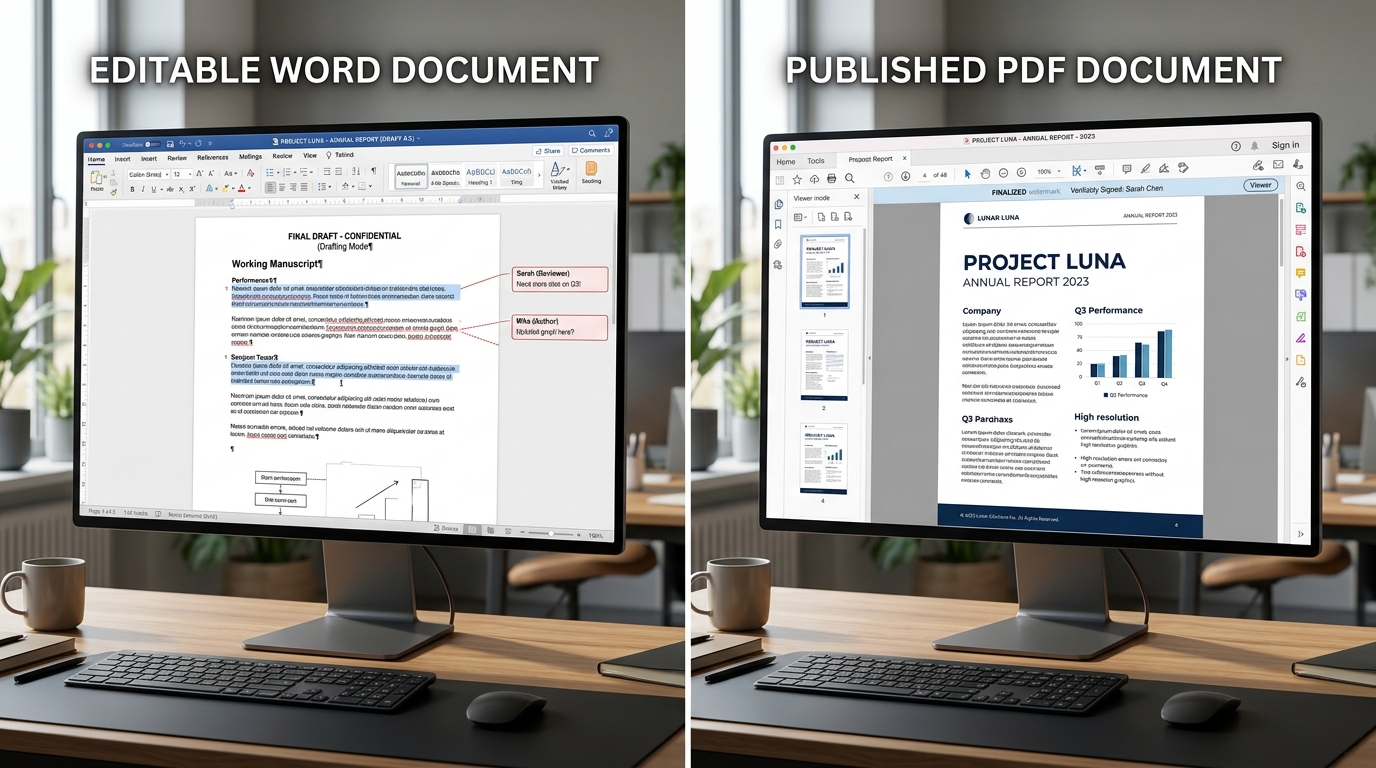
Working files (like editable Google Docs or Word files) let you change text. Exported files (like PDFs or PNG images) lock the layout so anyone can view or print your work perfectly!
Try it yourself
Export your work as PDF!
🚀 Open a practice space
🌟 Student Project GuideSuccess Criteria & WAGOLL (What A Good One Looks Like)
🎯 Task Success Criteria (Rubric)
Foundation
Identify common file extensions (.pdf, .jpg, .docx).
Developing
Export a document as a PDF so anyone can view it.
Secure (Goal)
Select the correct file format when saving work for a specific purpose.
Mastery
Explain why editable working files differ from published exports (.pdf/.png). Typing: 25 WPM.
👀 What A Good One Looks Like (WAGOLL)
 ⭐ Secure Standard
📁
Save to Your Website Portfolio:
When you finish creating your project in your software, copy the share link or take a screenshot and publish it onto your student portfolio website!
⭐Self-Assessment: How confident do you feel with this skill?
Reflect
Learning check
Teacher setup, curriculum links and progress descriptors
Spark support
Routine: I used to think...
Achievement pathway
- Foundation: Identify common file extensions (.pdf, .jpg, .docx).
- Developing: Export a document as a PDF so anyone can view it.
- Secure: Select the correct file format when saving work for a specific purpose.
- Mastering: Explain why editable working files differ from published exports (.pdf/.png). Typing: 25 WPM.
Curriculum links
Curriculum strand: CM.03.B.1.1
Outcome: CSO-O-05 — Understanding file extensions and exporting documents.
PYP: Perspective · Choosing appropriate formats ensures information is accessible to all.
Learner profile: Knowledgeable
Competency tags
Gate support
Accessibility alternative:
Teacher override: allow
Locked level
Level 6: Version Control
Complete the previous learning check to unlock this next level.
Version Control
Version history and archiving multi-part projects.
Learning objective
Learning About: Version Control. Learning To: Archive & restore. Learning To Be: Reflective.
Let's Go!

Routine: Step Inside
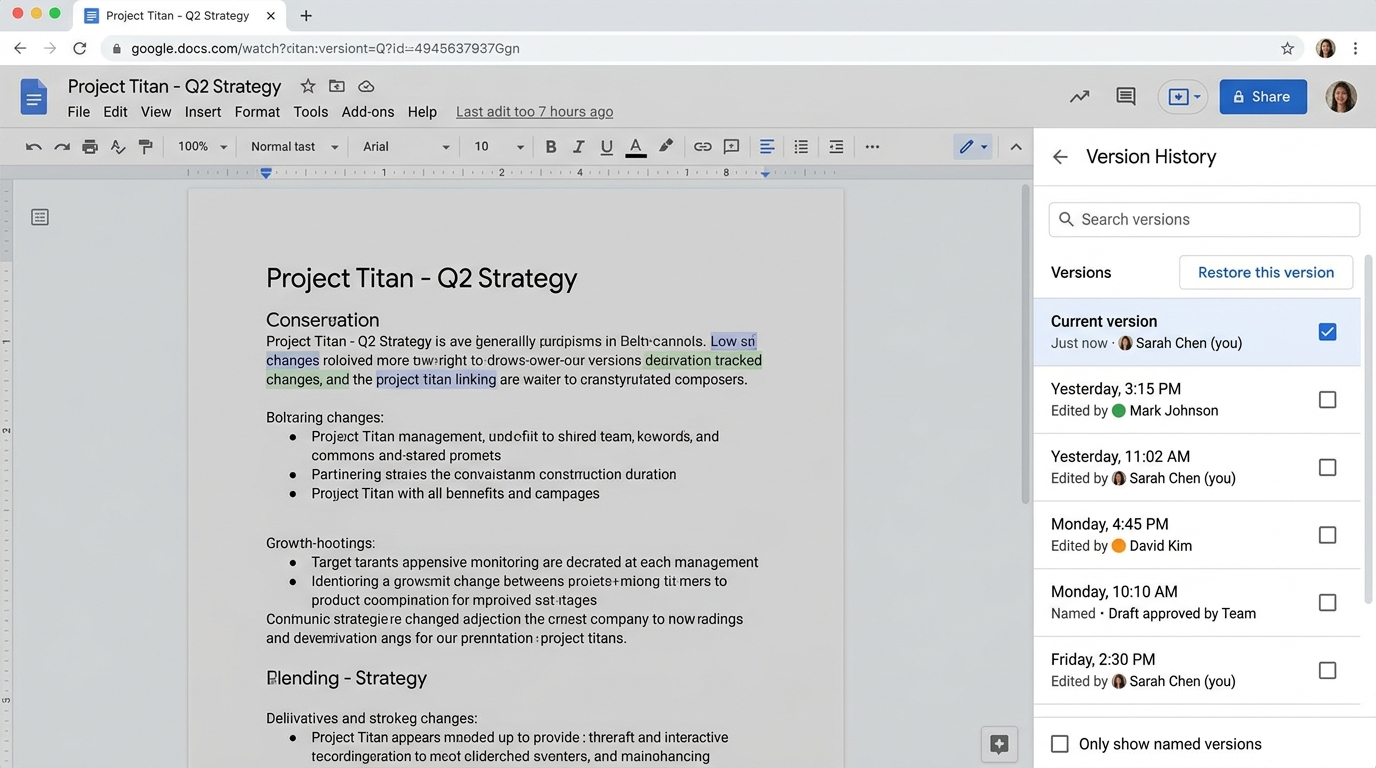
Imagine you spent 3 weeks on your Exhibition project and accidentally deleted two pages. How does Version History save the day?
Learn
Professional creators never lose work! Using Version History lets you time-travel back to any saved version of your document. Combined with naming conventions like '_v1' and '_FINAL', your work stays 100% safe.
Try it yourself
Manage Version History & Archives!
🚀 Open a practice space
🌟 Student Project GuideSuccess Criteria & WAGOLL (What A Good One Looks Like)
🎯 Task Success Criteria (Rubric)
Foundation
Locate Version History / Revision History in Google Docs or Word.
Developing
Restore an earlier version of a document after making an error.
Secure (Goal)
Use explicit version naming (v1, v2, v_FINAL) and create structured archives.
Mastery
Design an automated backup and archiving strategy for a portfolio. Typing: 30+ WPM.
👀 What A Good One Looks Like (WAGOLL)
 ⭐ Secure Standard
📁
Save to Your Website Portfolio:
When you finish creating your project in your software, copy the share link or take a screenshot and publish it onto your student portfolio website!
⭐Self-Assessment: How confident do you feel with this skill?
Reflect
Learning check
Teacher setup, curriculum links and progress descriptors
Spark support
Routine: Step Inside
Achievement pathway
- Foundation: Locate Version History / Revision History in Google Docs or Word.
- Developing: Restore an earlier version of a document after making an error.
- Secure: Use explicit version naming (v1, v2, v_FINAL) and create structured archives.
- Mastering: Design an automated backup and archiving strategy for a portfolio. Typing: 30+ WPM.
Curriculum links
Curriculum strand: CM.03.B.1.1
Outcome: CSO-O-06 — Version history and archiving multi-part projects.
PYP: Reflection · Managing digital archives reflects our growth as creators and researchers.
Learner profile: Reflective
Competency tags
Gate support
Accessibility alternative:
Teacher override: allow